Why the Parlour Gave Way to the Living Room
Parlour and living room layouts serve different routines. Compare their uses and choose a welcoming arrangement that fits your home without wasting space.
The common mistake in a small city home is treating the living room as either a formal parlour or a casual lounge. That false choice can leave the space awkward for guests and uncomfortable for everyday use. The contrast between parlour and living room is more useful as a way to think about a room’s purpose than as a simple historical account of one replacing the other.
A parlour keeps receiving guests as its main purpose
A parlour is a room set aside primarily for receiving visitors, separate from areas used for cooking, sleeping, and routine household activity. Its furnishings and arrangement signal that guests are being welcomed into a distinct space. Seats might face one another or gather around a central table, while workaday objects stay elsewhere.
This arrangement suits a household that has room for a dedicated guest space and wants a quieter setting for conversation. It is less useful when the room would sit unused or duplicate an everyday sitting area. The name matters less than whether that dedicated purpose solves a real problem for the people who live there.
A living room supports daily routines as well as company
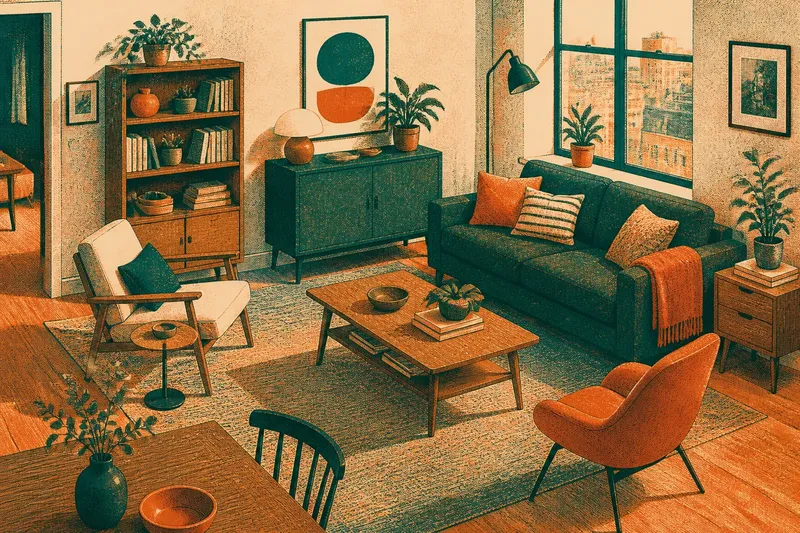
A living room brings several kinds of use together: conversation, reading, relaxing, listening to music, and occasional entertaining. Rather than reserving the room mainly for visitors, its furniture can serve household members every day and make space for guests to join them.
The distinction is not simply a matter of chair style. It is about what organizes the room. A sofa, side chair, lamp, and low table can support ordinary use without ruling out a polite gathering. In a compact apartment, this flexibility matters because the same room may be the main place to relax and welcome friends.
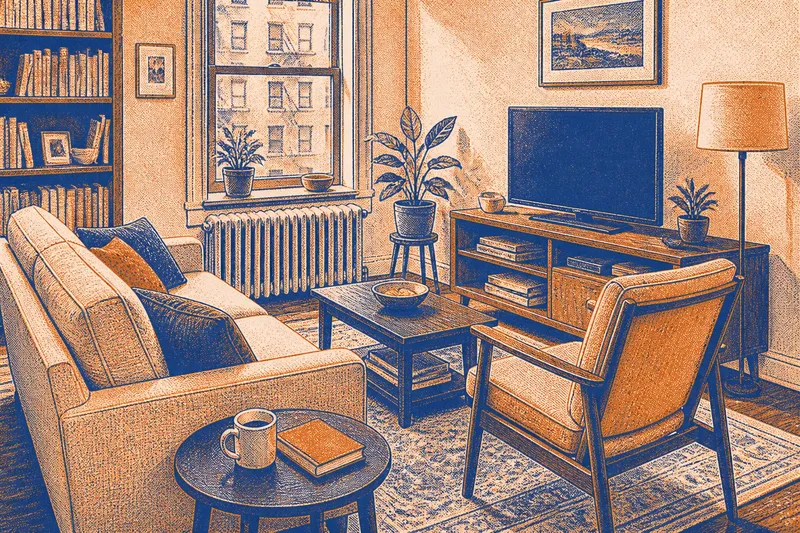
Flexibility does not mean every activity belongs everywhere. A room works better when its dominant use is clear and secondary uses fit around it. Seats facing one another encourage conversation; seats aimed at a screen make viewing the dominant activity. A thoughtful layout can accommodate both without giving either use the whole room.
Use these observations to choose a room arrangement
Start with what happens in the room, then choose the degree of formality that supports those habits. Each observation below points to a decision and an alternative if the room’s constraints suggest a different approach.
- Observation: Visitors come often, and you want conversation to be the focus. If you have a separate everyday area, then arrange the main seats toward one another in a parlour-like group; otherwise, keep the everyday layout and turn one movable chair toward guests.
- Observation: Household members spend most of their time in this room. If the sofa or favorite chairs are the usual seats, then place reading or task lighting beside them; otherwise, move the light to the seat people actually use.
- Observation: You host occasionally but need the room every day. If spare chairs can be stored nearby, then bring them out when company arrives; otherwise, choose everyday seating that can turn toward visitors.
- Observation: The room is narrow or doubles as a passage. If chairs across the natural route interrupt movement, then turn one inward or move it beside the wall; otherwise, preserve the conversational group and keep the walking route clear.
- Observation: You want a quiet place for reading or conversation away from screens. If another room already handles lounging, then give this one a focused, parlour-like purpose; otherwise, keep the quiet seat as one zone within a shared living room.
- Observation: A delicate table sits where people pass or set down daily items. If it is in the way or feels too precious to use, then move it out of the traffic route or replace it with a sturdier surface; otherwise, keep it near the seats where it serves a clear purpose.
Say you live in a narrow apartment where the sofa faces a television, but friends often end up speaking across the screen. For this invented example, assume a lightweight chair can fit beside the sofa without blocking the doorway. Turn that chair toward the sofa and place a small table between the seats; the expected result is a conversational group that retains the familiar sofa setup. If the chair blocks the route, keep it beside the wall and pull it into the group only when visitors arrive.
Furniture placement shapes the room’s cues
Furniture does not determine a room’s purpose on its own, but its arrangement sends a clear signal. Seats directed toward one another invite conversation. Seats all facing a single focal point make another activity dominant. A shared living room can combine both: keep the main seating oriented for talk while allowing a chair or sofa to turn toward a screen or window.
Surfaces and lighting matter, too. A small table near a seat gives someone a place for a book or cup; a lamp beside a reading chair makes that use easier. A fragile table in a busy route may be inconvenient, so move it near the seating or choose a more practical surface.
It is not worth the effort to keep a room permanently staged for an imagined guest. Comfortable seating, useful light, and a clear route usually do more for daily life and hospitality than elaborate decoration.
Which room arrangement fits your household?
Does a formal receiving room still make sense?
It can, if your home has a separate everyday area and you want a quieter place for conversation or guests. If the room would rarely be used, a dedicated formal role may take space from activities that matter more.
Can a living room still feel ready for visitors?
Yes. Arrange seats so people can address one another, clear everyday clutter before guests arrive, and make a nearby surface available. A room used daily does not need to imitate a rarely occupied parlour to feel hospitable.
What if one room has to serve both purposes?
Give it an everyday anchor, such as a sofa or a pair of frequently used chairs, and treat the guest arrangement as an adjustment rather than a second permanent layout. Movable chairs and a small table can shift the emphasis without crowding the room all week.
How can you tell whether the room’s purpose is unclear?
Notice whether furniture blocks routine movement or people avoid using the room because it feels too precious. If either happens, reconsider which activity matters most and remove or reposition the pieces that compete with it.
Let the room’s name follow its use
The useful distinction between a parlour and a living room is the role each arrangement serves: one prioritizes receiving guests, while the other supports everyday life alongside company. For most homes with a single shared sitting area, the living-room approach can adapt to both. A dedicated receiving room makes more sense when the household has space and a clear need for one.
Try a new arrangement during ordinary routines before making further changes. Notice where people naturally sit, where conversation begins, and which route they take across the room. Those observations help you decide whether the layout supports your actual habits, and whether a parlour-like focus or a more flexible living room better fits the space.