The Matching Furniture Set: A Shortcut That Can Flatten a Room
A matching furniture set can make a city room feel flat. Use shared proportions, materials, and color notes to connect pieces without making them identical.
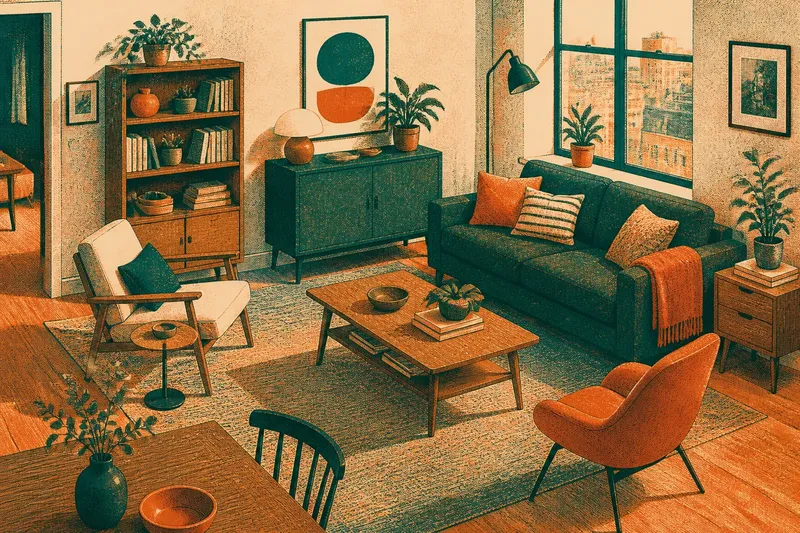
The common mistake with a matching furniture set is assuming every piece in a room must come from the same collection. It can make a compact city living room feel more like a showroom than a home, because the eye has no differences to explore. The alternative is not random mixing: give the room a few deliberate points of connection, then let individual pieces keep their character.
Use these choices to build that connection without buying a coordinated suite or replacing furniture you already like.
1. Match the visual weight, not every silhouette
Visual weight is how substantial a piece appears, shaped by its size, color, leg visibility, and mass. A low sofa with narrow legs can feel light, while a tall cabinet with a dark finish may feel heavy even if its footprint is modest. If every item has the same blocky shape, the room can look static; if all the pieces feel equally delicate, the arrangement may seem insubstantial.
Look for a balance of forms. Pair a substantial sofa with a slim-legged side table, or set a light-frame armchair beside a grounded bookcase. The pieces need not share a design, but their apparent weight should feel considered across the room. In a narrow apartment, keep the largest visual masses from clustering at one end: a tall cabinet and dark sofa together can make that side seem crowded, even when the floor plan is clear.
Check the room from the doorway and from the seat where you spend most of your time. Notice whether one corner draws all the attention or whether the furniture reads as a single uninterrupted band. A change in leg shape, height, or open space beneath a piece can give the eye a pause without adding another decorative object.
2. Repeat a proportion to make different pieces feel related
Proportion is the relationship between a piece’s dimensions and the dimensions of nearby objects. It is more subtle than matching styles, but it gives mixed furniture a useful rhythm. For instance, several items can share a low profile, a similar seat height, or a comparable amount of visible space beneath them.
Say you have a long, low sofa and a vintage cabinet that is taller and visually busy. You add a simple coffee table whose top sits comfortably within the sofa’s low silhouette, then choose a floor lamp with a slim stem rather than another broad, tall object. The expected result is a room with varied shapes that still feels linked by a calm horizontal line and a lighter vertical accent.
Do not chase exact alignment if it makes the room awkward to use. A table should suit how you reach for a drink, and a chair should be comfortable for the person who uses it. Proportion is a visual guide, not a reason to accept furniture that fails its everyday job.
3. Repeat one material in different forms
A shared material can connect furniture from different periods or sources without making it look like a set. Oak, walnut, cane, blackened metal, and brushed brass each have a distinct visual character. Repeating one in more than one place helps establish a thread, while varying the form keeps the room from looking copied from a catalog.
For example, an oak dining table can relate to a small oak frame, a shelf, or the edge detail on a cabinet. Those items need not have the same grain, finish, or design language. One warm wood note in a different shape may be enough to make the table feel included in the room’s composition.
Pay attention to undertones and finish. Pale, yellow-toned wood may look discordant beside a strongly red-toned stain, while two pieces with slightly different grains can sit comfortably together if their warmth is similar. A small sample, such as a drawer front or a wood swatch, is more useful than relying on a product photograph viewed under different lighting.
4. Use color as a small connecting note
Furniture does not need to be the same color to belong together. Instead, repeat a color in modest doses: a painted chair, a cushion, a lamp base, or the inside of a bookcase. This creates a visible relationship without turning every surface into one continuous block of color.
Start with the largest existing pieces. If a sofa is deep green and a rug has a muted green thread, a small green detail on a chair can connect them. If the room already has several strong colors, use a quieter shared tone rather than adding another accent. A color note can be carried by a removable cushion or tray, so the connection is easy to adjust if the room begins to feel too coordinated.
Look at color in the room itself rather than judging pieces under store lighting. A warm neutral may read differently beside a cool gray wall, and a glossy finish can appear more vivid than a matte one. The aim is a recognizable relationship, not a perfect color match.
5. Let one piece carry a different point of view
A room benefits from one or two pieces that do not follow its main visual pattern. A sculptural chair, a painted cabinet, or a small table with an unusual base can give the arrangement a focal point. The contrast is most effective when the standout piece has enough space around it to be read clearly.
Choose a difference that relates to something already present. A curved chair can soften a room full of straight-edged furniture; an older wooden chest can give a polished, contemporary sofa a less uniform neighbor. If every piece is a statement, none has room to stand out. If everything is restrained, one distinct shape can add character without requiring a room-wide makeover.
In a small apartment, consider the view through doorways and across the main seating area before adding a focal piece. A bold object may be more effective where it can be seen from several positions, rather than squeezed between other items. Keep circulation and access to storage in mind; a striking chair is less useful if it blocks a route or makes a cabinet hard to open.
6. Mix finishes with a clear limit
Wood, metal, glass, painted surfaces, and upholstery can all coexist, but a room with no repeated finish may feel disconnected. Choose a primary finish family, then use another material as a deliberate counterpoint. For example, warm wood furniture can sit comfortably with a few black metal details, while glass or stone adds a different texture without competing for attention.
Count the materials you can see at once, especially in a small open-plan room where the living and dining areas share one view. If every furniture piece introduces a different finish, edit the smaller accessories or bring one material back in through a lamp, frame, or shelf. The goal is not a strict formula; it is enough repetition for the eye to recognize a relationship.
Some variation is not worth the effort to correct. A hidden back panel or the underside of a table rarely needs to match a visible finish, and chasing an exact stain across separate manufacturers can consume time without improving the room. Spend attention on surfaces that appear together in the main view.
7. Keep the collection useful, not merely coordinated
Before buying a replacement piece to complete a set, ask what the room actually lacks. It may need closed storage, a smaller table, a place to sit, or a clearer path between the door and the sofa. A matching item that does not answer a real need can add bulk while making the room less flexible.
Measure the available floor area and the route around the furniture, then compare candidate pieces by function, footprint, and visual weight. Consider whether an existing item can be refinished, moved, or paired with a different lamp or cushion. The useful question is not whether the new piece matches the sofa, but whether it adds a role and supports the room’s existing relationships.
Questions to ask before adding another matching piece?
Do all my furniture pieces need to match?
No. A room can feel coherent when pieces share a proportion, material, color note, or visual weight, even if their shapes and origins differ. Exact matching is one option, not a requirement.
How many wood finishes can work in one room?
There is no fixed count that suits every room. Compare the woods in the same light, notice whether their undertones feel compatible, and repeat one finish or warmth elsewhere to link the group.
What should I match first when mixing furniture?
Start with the largest visible pieces and identify what already connects them, such as their height, leg style, color, or material. Then choose the next item for its use and footprint, using a repeated detail to tie it in.
Can a mismatched furniture piece become a focal point?
Yes, if it has room to stand apart and its contrast relates to the rest of the room. A distinctive chair or cabinet can draw the eye without disrupting the arrangement when nearby pieces give it some visual breathing space.
A matching furniture set is not the only route to a finished room. Choose one connection that is already present, repeat it with restraint, and let the remaining pieces differ in ways that support their use. That approach keeps the furniture related while leaving the room enough variation to feel lived in.